
DUI Insurance for Delivery Drivers — Idaho
Free to compare
The Violation Hits Your Gig Account Before Your Mailbox
Idaho Transportation Department suspends your license 30 days after your DUI arrest. DoorDash, Uber Eats, Instacart, and Amazon Flex pull your background check the moment the suspension posts to your motor vehicle record — usually within 48 hours of the ITD action. Your account is deactivated before you receive the SR-22 reinstatement letter. You need to solve two problems simultaneously: satisfy Idaho's three-year SR-22 filing requirement to get a restricted license, and prove to the platform that your insurance covers delivery work under that restricted license.
Most suspended drivers only deal with the state. Delivery drivers deal with the state and a corporate compliance system that runs separate insurance verification rules. The SR-22 filing Idaho requires does not automatically satisfy DoorDash's commercial-use policy requirement. That structural gap is where most delivery drivers get stuck, and it is where this article opens.
“Your SR-22 filing satisfies Idaho. Your SR-22 policy's commercial-use exclusion fails DoorDash. Most agents stop at the filing and never mention the exclusion.”

Get Back to a Fair Rate in Idaho After a DUI
Get My Idaho DUI Insurance Quote$125–$215/mo
Idaho SR-22 Premium Range
Post-DUI drivers in Idaho typically pay $125 to $215 per month for minimum liability SR-22 coverage through non-standard carriers like Dairyland, Bristol West, or The General. This does not include platform-required commercial endorsements, which add $40 to $90 per month depending on carrier and delivery frequency.
Estimates based on carrier filings and Idaho non-standard auto rate surveys, 2024
Why Your Personal SR-22 Policy Excludes Delivery Work
Idaho requires SR-22 proof of financial responsibility for three years following DUI conviction. The SR-22 itself is a filing, not a policy — it attaches to a personal auto liability policy meeting Idaho's $25,000/$50,000/$15,000 minimums. Carriers like Dairyland, GAINSCO, Progressive, and The General write SR-22 policies for post-DUI drivers in Idaho. These policies cover personal driving: commuting, errands, social trips.
Standard personal auto policies — including those carrying SR-22 filings — contain explicit exclusions for commercial use of the vehicle. Delivering food, groceries, or packages for compensation is commercial use. If you are in an at-fault accident while on a DoorDash delivery under a personal-only policy, the carrier denies the claim. The platform's liability umbrella does not cover you when your personal policy has excluded the trip. You are exposed, the other driver is uncompensated, and Idaho re-suspends your license for driving uninsured.
DoorDash and other gig platforms require proof that your policy explicitly covers delivery activity. They do not accept personal SR-22 certificates because the underlying policy excludes the work. This is the structural blocker: Idaho only cares that you carry SR-22; the platform cares what the SR-22 policy actually covers. Standard SR-22 solves the state problem but fails the platform compliance check.

Your SR-22 filing satisfies Idaho. Your SR-22 policy's commercial-use exclusion fails DoorDash. Most agents stop at the filing and never mention the exclusion.


How Restricted License Rules Interact with Delivery Work
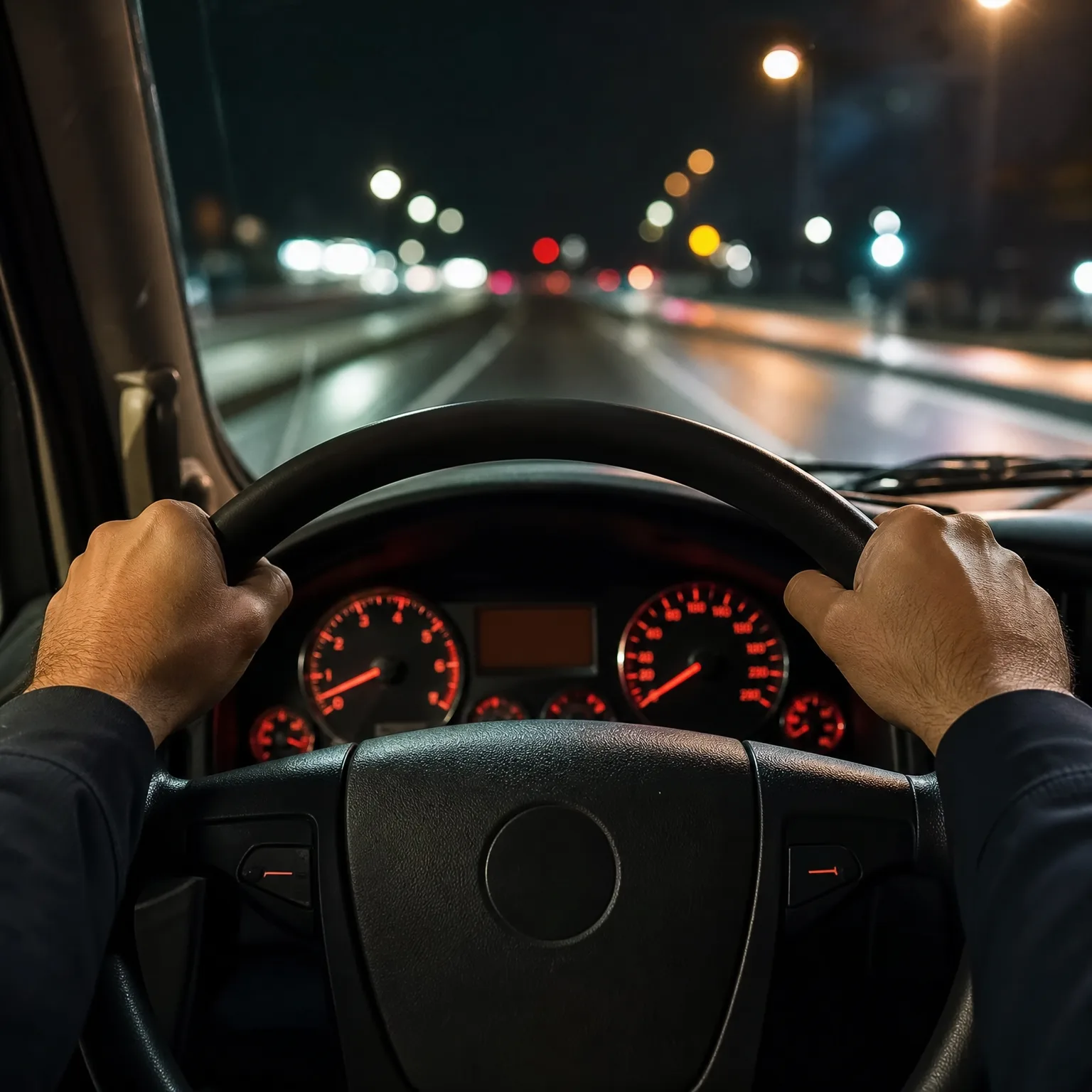
Idaho courts issue restricted licenses during DUI suspension periods after a mandatory 30-day absolute suspension. The restricted license allows driving for court-approved purposes: work, school, medical appointments, and other necessities the judge authorizes. Delivery driving qualifies as work if the court approves it in the order. You petition the court for a restricted license, specify delivery driving as your employment, and provide proof of the job (platform account screenshot, earnings statement, or activation email).
The restricted license order defines when and where you can drive. Most Idaho judges approve work-related driving without hourly limits if employment is verified. The ignition interlock device (IID) must remain installed for the entire restricted license period — Idaho Code § 18-8008 requires IID for all DUI restricted licenses. The IID vendor reports violations (failed breath tests, tampering, missed rolling retests) to the court and ITD. A single violation can revoke the restricted license immediately, re-suspending you with no gig-platform income and no ability to reinstate until the original suspension period ends.
DoorDash and Uber Eats accept restricted licenses in Idaho if the court order explicitly permits commercial driving activity. Upload the court order showing work authorization and the dates of restriction. If the order is silent on delivery work or limits driving to a single employer by name, the platform will reject it. Go back to the issuing court with an amended petition specifying gig-platform delivery by name. Idaho courts routinely approve amendments when the restricted license is already active and no violations have occurred.
3 years
Idaho SR-22 Filing Duration
Idaho requires continuous SR-22 filing for three years following DUI conviction, measured from the conviction date. If your policy lapses or the carrier cancels coverage, ITD receives electronic notice within 24 hours and re-suspends your license immediately. The three-year clock does not restart, but you must refile SR-22 and pay a new $25 reinstatement fee to lift the lapse suspension.
Idaho Code § 49-326, Idaho Transportation Department SR-22 program rules

Carrier Availability and Filing Speed
Dairyland, GAINSCO, Progressive, The General, and Bristol West write SR-22 policies for post-DUI drivers in Idaho and file electronically with ITD the same business day the policy binds. State Farm writes SR-22 in Idaho but typically declines applicants with DUI convictions in the past 36 months — contact a State Farm agent directly to confirm current underwriting rules. Geico writes SR-22 and accepts some DUI applicants depending on time since conviction and prior insurance history.
For delivery endorsements, Progressive and Nationwide offer the clearest path in Idaho. Request the HNOA or delivery rider when quoting the SR-22 policy. The endorsement appears on the declarations page and the certificate of insurance the platform requests. If the agent says the endorsement is not available, the issue is usually underwriting tier — the delivery endorsement may be restricted to standard-tier policies, and post-DUI applicants are placed in non-standard tier. In that case, the two-policy pathway is your only option.
Get Coverage That Clears Both Gates
Call three carriers writing post-DUI SR-22 in Idaho and ask two questions: does the policy include SR-22 electronic filing to ITD, and can you add a delivery or HNOA endorsement to cover gig-platform work. If the answer to both is yes, request the combined certificate showing the SR-22 filing and the commercial endorsement. If no carrier offers the hybrid structure, quote a standalone commercial delivery policy from FLIP, Buckle, or Coterie and maintain the personal SR-22 policy separately. Upload the commercial certificate to DoorDash and mail the SR-22 filing confirmation to ITD. Both systems clear, your restricted license holds, and you return to work under coverage that actually protects the trip.
The SR-22 requirement runs three years from your conviction date. The platform compliance check runs every time your policy renews or you reactivate your account after deactivation. Missing either check stops your income. Start with the carrier that writes both pieces or accept the two-policy structure from the beginning. Trying to bypass the platform's commercial-use requirement with a personal-only SR-22 certificate fails the moment they verify the exclusion, and reactivation denials do not come with appeal windows.
Two Pathways to Platform-Compliant Coverage
Pathway one: personal SR-22 policy with hired/non-owned auto (HNOA) or delivery endorsement added. Progressive, State Farm, and Nationwide offer HNOA endorsements in Idaho that extend liability coverage to delivery activity. The endorsement adds $40 to $90 per month to the base SR-22 premium. The carrier issues a single certificate of insurance showing both the SR-22 filing and the commercial endorsement. This certificate satisfies Idaho and uploads cleanly to DoorDash's platform compliance portal. You carry one policy, one billing relationship, one renewal cycle.
Pathway two: separate personal SR-22 policy for Idaho reinstatement, plus a standalone commercial delivery policy for platform compliance. Carriers like FLIP, Buckle, and Coterie write delivery-specific policies that cover gig work explicitly. These policies do not carry SR-22 filings because they are commercial, not personal. You maintain the personal SR-22 policy to satisfy Idaho's three-year filing requirement and show the commercial policy certificate to DoorDash. Two policies, two premiums, but total cost is often comparable to the hybrid endorsement route — $160 to $280 per month combined depending on your delivery hours per week and vehicle type.
Get Your Free Quote
Get My Idaho DUI Insurance QuoteFrequently Asked Questions
Can I use a personal SR-22 policy for DoorDash deliveries in Idaho?
No. Personal auto policies — including those carrying SR-22 filings — exclude commercial use. Delivering for DoorDash, Uber Eats, or Amazon Flex is commercial use. If you are in an at-fault accident during a delivery under a personal-only policy, the carrier denies the claim and Idaho re-suspends your license for uninsured driving. You need either a delivery endorsement added to your SR-22 policy or a separate commercial delivery policy.
Does Idaho allow restricted licenses for delivery drivers with DUI suspensions?
Yes. Idaho courts issue restricted licenses after the mandatory 30-day absolute DUI suspension period ends. Delivery driving qualifies as work if you petition the court, specify gig-platform employment, and provide proof (platform account screenshot or earnings statement). The court order must explicitly authorize commercial driving or name the platforms. Generic work authorization without delivery-specific language causes platform compliance rejections.
How much does SR-22 insurance cost for delivery drivers in Idaho after a DUI?
Post-DUI SR-22 policies in Idaho run $125 to $215 per month for minimum liability through non-standard carriers like Dairyland or The General. Adding a delivery or HNOA endorsement costs an additional $40 to $90 per month. Total monthly premium for platform-compliant coverage typically ranges from $165 to $280 depending on carrier, delivery hours per week, and vehicle type.
Which carriers in Idaho offer SR-22 with delivery endorsements?
Progressive and Nationwide offer hired/non-owned auto (HNOA) or delivery endorsements that can attach to SR-22 policies in Idaho. Availability depends on underwriting tier — post-DUI applicants placed in non-standard tier may not qualify for the endorsement. If no carrier offers the hybrid policy, you need a two-policy structure: personal SR-22 for Idaho reinstatement plus a standalone commercial delivery policy from FLIP, Buckle, or Coterie for platform compliance.
What happens if my SR-22 policy lapses while I am delivering in Idaho?
Idaho Transportation Department receives electronic notice of the lapse within 24 hours and re-suspends your license immediately. Your gig-platform account is deactivated when the suspension posts to your motor vehicle record, usually within 48 hours. You must purchase new SR-22 coverage, pay a $25 reinstatement fee, and wait for ITD to process the refile before your restricted license is reinstated. The three-year SR-22 filing period does not restart, but you lose income during the refile window.
Do I need an ignition interlock device to deliver for DoorDash under an Idaho restricted license?
Yes. Idaho Code § 18-8008 requires ignition interlock devices (IID) for all DUI restricted licenses. The IID must remain installed for the entire restricted license period. The vendor reports violations — failed breath tests, tampering, or missed rolling retests — to the court and ITD. A single violation can revoke your restricted license immediately, ending your ability to deliver until the original suspension period expires.