
Cheapest Insurance After DUI and Accident — Idaho
Free to compare
Why One Carrier Quotes $180 and Another $380
You've been quoted $180/month by one carrier and $380/month by another for the same liability coverage, both meeting Idaho's SR-22 requirement after your DUI and accident. The $200 spread isn't a mistake. Idaho carriers underwrite dual-trigger records — DUI plus at-fault accident within the same lookback window — as two separate high-risk events, and each carrier weights those events differently in their pricing models.
Some carriers penalize the DUI harder and treat the accident as secondary. Others do the reverse, applying steeper surcharges to collision claims than chemical violations. Your record hits both triggers at once, which means the carrier you pick determines which event drives your premium. The cheapest option for a DUI-only driver in Idaho is not necessarily the cheapest for a DUI-plus-accident driver.
“The carrier that prices your DUI lowest may not price your accident lowest — there is no universal cheapest carrier for dual-trigger records in Idaho.”

Get Back to a Fair Rate in Idaho After a DUI
Get My Idaho DUI Insurance Quote$2,400–$4,560/year
Idaho Dual-Trigger Premium Range
Idaho drivers carrying both a DUI conviction and an at-fault accident on record typically pay between $200 and $380 per month for state-minimum SR-22 liability coverage, depending on carrier underwriting model and county. The low end reflects carriers that tier DUI offenders into accident-tolerant buckets; the high end reflects carriers applying maximum surcharge stacking.
Estimates based on available Idaho carrier rate filings and SR-22 program data
How Idaho Carriers Stack DUI and Accident Surcharges
Idaho allows carriers to apply separate percentage surcharges for DUI convictions and at-fault accidents. A DUI conviction typically triggers a 60–120% surcharge over base rate. An at-fault accident with a claim over $1,000 typically triggers a 20–60% surcharge. When both events appear on your record, some carriers multiply these surcharges sequentially — base rate × DUI multiplier × accident multiplier — producing compound pricing that escalates faster than either event alone.
Other carriers cap total surcharge stacking at a ceiling percentage, meaning your dual-trigger record hits the same maximum as a DUI-only record would. Bristol West, Dairyland, GAINSCO, and The General — Idaho's primary non-standard carriers writing SR-22 policies — each apply different stacking rules. Progressive and Geico, both writing SR-22 in Idaho, tier dual-trigger drivers into separate risk pools rather than stacking surcharges additively.
The carrier that prices your DUI lowest may not price your accident lowest. You need quotes from at least four carriers to see where the underwriting models diverge. The structural reality: there is no universal 'cheapest carrier' for dual-trigger records in Idaho — the answer varies by how each carrier's model weights your specific violation sequence.
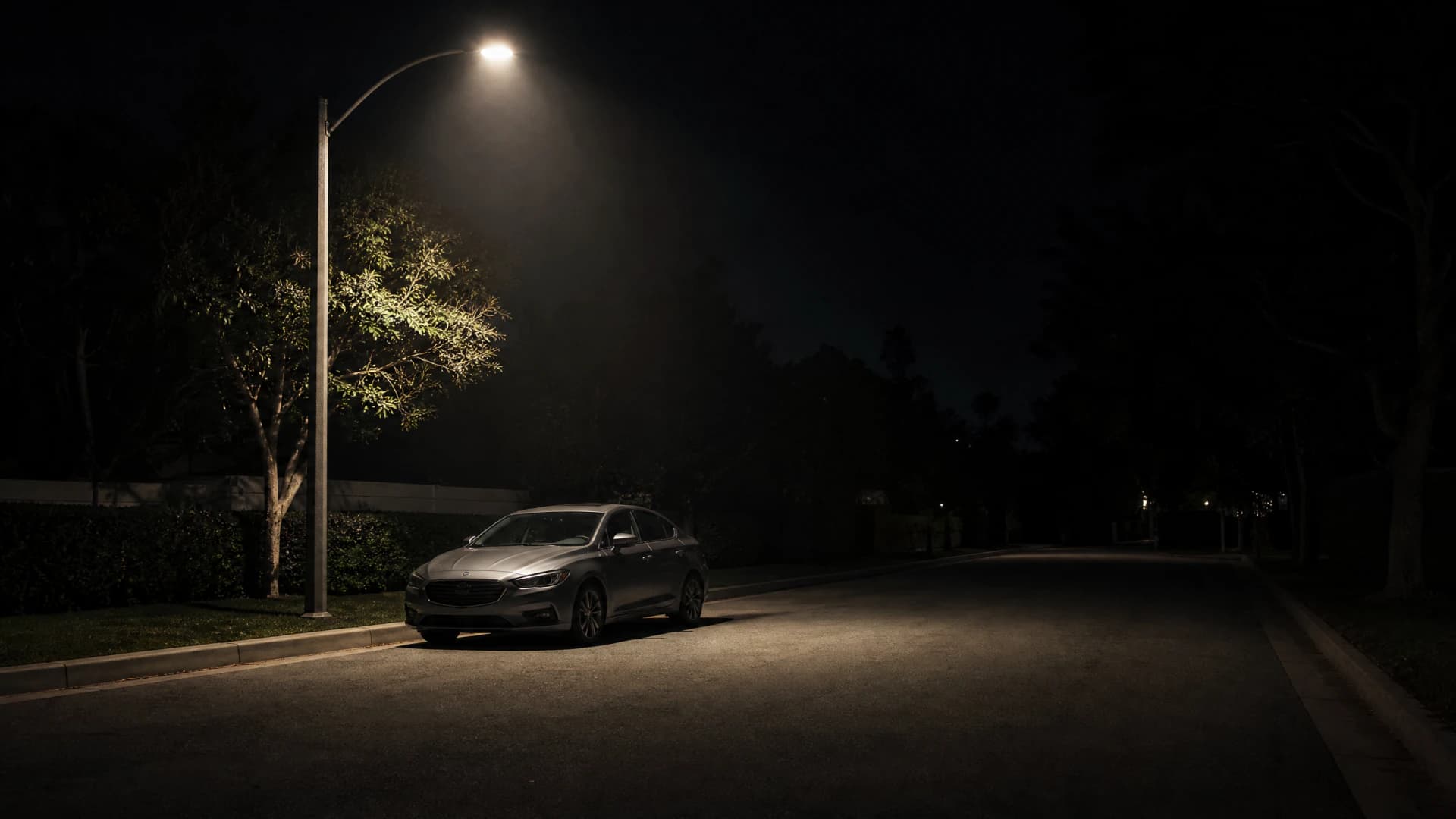
Idaho carriers see your DUI and accident as two separate underwriting events. One penalizes the DUI harder; another penalizes the accident harder. You're shopping for the mismatch.






How Idaho's Three-Year SR-22 Window Affects Your Rate
Idaho requires SR-22 filing for three years following a DUI conviction, measured from the conviction date. Your at-fault accident remains on your driving record for three years from the accident date. If your DUI conviction and accident occurred within the same calendar year, both events will age off your record within months of each other. If they occurred in separate years, one event will drop off before the other, triggering a rate reduction at the earlier anniversary.
Carriers re-rate your policy annually. When your accident drops off your record but your SR-22 filing period continues, your premium decreases — typically by 20–40% depending on the carrier's accident surcharge structure. When your SR-22 filing period ends and the DUI surcharge drops, your premium decreases again, often by 50–70%. Dual-trigger records create two separate rate-drop windows instead of one, which means your premium declines in stages rather than all at once at the three-year mark.
Track both anniversary dates. Request a re-quote 30 days before each event ages off your record. Carriers do not automatically apply the lower rate at the anniversary — you trigger the re-rating by requesting it. Missing the re-quote window means you continue paying the dual-trigger rate even after one event has cleared your record.
30 days
Idaho DUI Hard Suspension Period
Idaho Code § 18-8005 imposes a mandatory 30-day absolute suspension period for first-offense DUI before a restricted license may be granted. During this 30-day window, no driving is permitted under any circumstances. After 30 days, you may petition the court for a restricted license with ignition interlock if you meet eligibility conditions.
Idaho Code § 18-8005

Non-Owner SR-22 If You Sold Your Vehicle After the Accident
If you no longer own a vehicle following the accident — either because the vehicle was totaled, you sold it to cover costs, or you cannot afford to insure and register it during your suspension period — you still need an SR-22 filing to satisfy Idaho's reinstatement requirements. A non-owner SR-22 policy provides the liability coverage Idaho requires without insuring a specific vehicle. Dairyland, GAINSCO, The General, Progressive, Geico, and USAA all write non-owner SR-22 policies in Idaho.
Non-owner policies cost significantly less than standard auto policies because they carry no collision or comprehensive coverage and no vehicle-specific risk. Expect $40–$80/month for non-owner SR-22 coverage with state-minimum liability limits after a DUI and accident, compared to $200–$380/month for a standard policy. The SR-22 filing itself costs the same whether attached to a standard or non-owner policy — typically $25–$50 as a one-time processing fee — but the monthly premium difference over three years adds up to $5,000+ in savings if you do not currently need to insure a vehicle.
Get Quotes Before Your Restricted License Hearing
If you are petitioning for a restricted license in Idaho following your DUI suspension, the court will require proof of SR-22 insurance before granting the restricted license order. You cannot obtain a restricted license first and then find insurance — the SR-22 filing must be active and on file with the Idaho Transportation Department before the court hearing. Carriers can issue an SR-22 filing and activate your policy within 24–48 hours of payment, but the filing does not reach ITD instantly — allow at least five business days between purchasing the policy and your court date to ensure the filing clears ITD's system.
Bring the SR-22 certificate to your restricted license hearing as proof of compliance. The certificate is a one-page document your carrier mails or emails after filing electronically with ITD. If your hearing is scheduled within seven days, call the carrier directly after purchasing the policy online and request expedited certificate delivery via email. Missing the SR-22 proof at the hearing typically results in automatic denial of the restricted license petition, requiring you to reschedule and restart the 30-day processing window. Compare carriers now — not the week of your hearing — so you have time to lock in the lowest rate and confirm the filing before the court date.
Which Carriers Write Dual-Trigger SR-22 in Idaho
Bristol West, Dairyland, GAINSCO, and The General operate as Idaho's primary non-standard auto carriers and all four write SR-22 filings for dual-trigger records. Bristol West routes quotes through the Farmers agency network or independent agents — no direct online quoting. Dairyland, GAINSCO, and The General offer online quotes directly. Progressive and Geico, both standard-tier carriers, also write SR-22 in Idaho and will quote dual-trigger records, though their acceptance criteria vary by county and total claim history.
State Farm writes SR-22 in Idaho but does not consistently quote new policies for drivers with DUI convictions plus at-fault accidents in the same three-year window — eligibility depends on your existing relationship with the company. National General writes SR-22 and accepts dual-trigger records but requires a phone quote rather than online submission. Start with Dairyland, GAINSCO, The General, and Progressive for the widest immediate comparison spread.
Get Your Free Quote
Get My Idaho DUI Insurance QuoteFrequently Asked Questions
Do I need SR-22 insurance in Idaho after both a DUI and an at-fault accident?
Yes. Idaho requires SR-22 filing for three years following a DUI conviction under Idaho Code § 18-8005, regardless of whether you also have an at-fault accident on your record. The SR-22 filing requirement is triggered by the DUI alone; the accident does not create a separate SR-22 obligation but does affect your premium because carriers apply surcharges for both events.
How much does SR-22 insurance cost in Idaho after a DUI and accident?
Idaho drivers with both a DUI conviction and an at-fault accident on record typically pay $200–$380/month for state-minimum SR-22 liability coverage, depending on the carrier's underwriting model. Non-owner SR-22 policies for drivers without a vehicle cost $40–$80/month. The wide range reflects how different carriers weight DUI versus accident surcharges — some penalize the DUI harder, others the accident.
Which Idaho carriers write SR-22 policies for drivers with a DUI and an accident?
Bristol West, Dairyland, GAINSCO, The General, Progressive, Geico, and National General all write SR-22 policies in Idaho for drivers with dual-trigger DUI-plus-accident records. Bristol West requires an agent quote. Dairyland, GAINSCO, The General, and Progressive offer online quotes. Start with at least four carriers to see where underwriting models diverge on dual-trigger pricing.
Can I get a restricted license in Idaho with a DUI and an accident on my record?
Yes. Idaho allows restricted licenses (also called hardship licenses) after the mandatory 30-day hard suspension period for first-offense DUI, even if you also have an at-fault accident on your record. You must petition the court, provide proof of SR-22 insurance, and install an ignition interlock device if required by the court. The accident does not disqualify you from restricted license eligibility.
How long does Idaho require SR-22 filing after a DUI?
Idaho requires SR-22 filing for three years after a DUI conviction, measured from the conviction date. Your SR-22 must remain active and on file with the Idaho Transportation Department continuously for the entire three-year period. If your policy lapses or cancels, ITD is notified electronically and your license is re-suspended until you file a new SR-22 and pay reinstatement fees.
What happens to my rate when my accident drops off but my SR-22 filing period continues?
Your premium decreases when your at-fault accident ages off your three-year driving record, even if your SR-22 filing period continues. Expect a 20–40% rate reduction at the accident anniversary, depending on the carrier's accident surcharge structure. You must request a re-quote from your carrier to trigger the re-rating — it does not happen automatically.