
Cheapest Car Insurance After At-Fault Accident and DUI — Idaho
Free to compare
Why Standard Carriers Won't Quote Dual Violations
You're not getting a quote from State Farm or Allstate right now. Idaho suspends your license for 90 days minimum after a DUI, and when that DUI stacks with an at-fault accident on the same driving record, standard-tier carriers pull out of underwriting entirely. The dual violation flags you as uninsurable under their actuarial models. This isn't personal—it's underwriting math. Standard carriers price risk in tiers, and dual major violations push you past the ceiling of their highest tier.
The cheapest path forward isn't shopping standard carriers harder. It's targeting the four non-standard carriers licensed in Idaho that explicitly write SR-22 policies for drivers with stacked violations: Progressive, Geico, Dairyland, and The General. These carriers build their underwriting models to price dual-violation risk instead of rejecting it outright. You're not looking for the lowest rate in the market—you're looking for the lowest rate among carriers that will actually issue a policy.
“Standard carriers use dual major violations as an automatic decline trigger—you're identifying which non-standard carriers will issue a policy, not comparing discounts.”

Get Back to a Fair Rate in Idaho After a DUI
Get My Idaho DUI Insurance Quote3 years
Idaho SR-22 Filing Period
Idaho requires continuous SR-22 filing for 3 years following DUI suspension reinstatement. The clock starts the day your license is reinstated, not the day of conviction. If the filing lapses for any reason—carrier cancellation, missed payment, voluntary drop—Idaho Transportation Department suspends your license again and the 3-year period restarts from zero.
Idaho Code § 18-8005
What Dual Violations Do to Premium Structure
A DUI alone moves you into non-standard tier. An at-fault accident alone usually keeps you in standard tier with a surcharge. Stacking both on the same record triggers a compounding penalty—carriers that write dual violations price the combined risk higher than the sum of individual surcharges. The underwriting system treats stacked major violations as predictive of future claims frequency, not just past behavior.
Non-standard carriers offset this by building premium models around violation profiles instead of clean-record baselines. Where a standard carrier adds a DUI surcharge to a clean-record base rate, a non-standard carrier starts with a violation-tier base rate and adjusts downward for mitigating factors: older violations, completion of required classes, maintaining continuous coverage during suspension, installing ignition interlock voluntarily. The premium floor is higher, but the pricing logic is inverted.
This is why shopping standard carriers for 'discounts' after dual violations wastes time. You're asking them to discount a policy they won't write. The question isn't 'who offers the best discount'—it's 'which non-standard carrier prices my specific violation stack lowest.' That answer varies by ZIP code, vehicle, and how long ago each violation occurred.

Standard-tier carriers use dual major violations as an automatic decline trigger. You're not comparing rates—you're identifying which non-standard carriers will issue a policy at all.
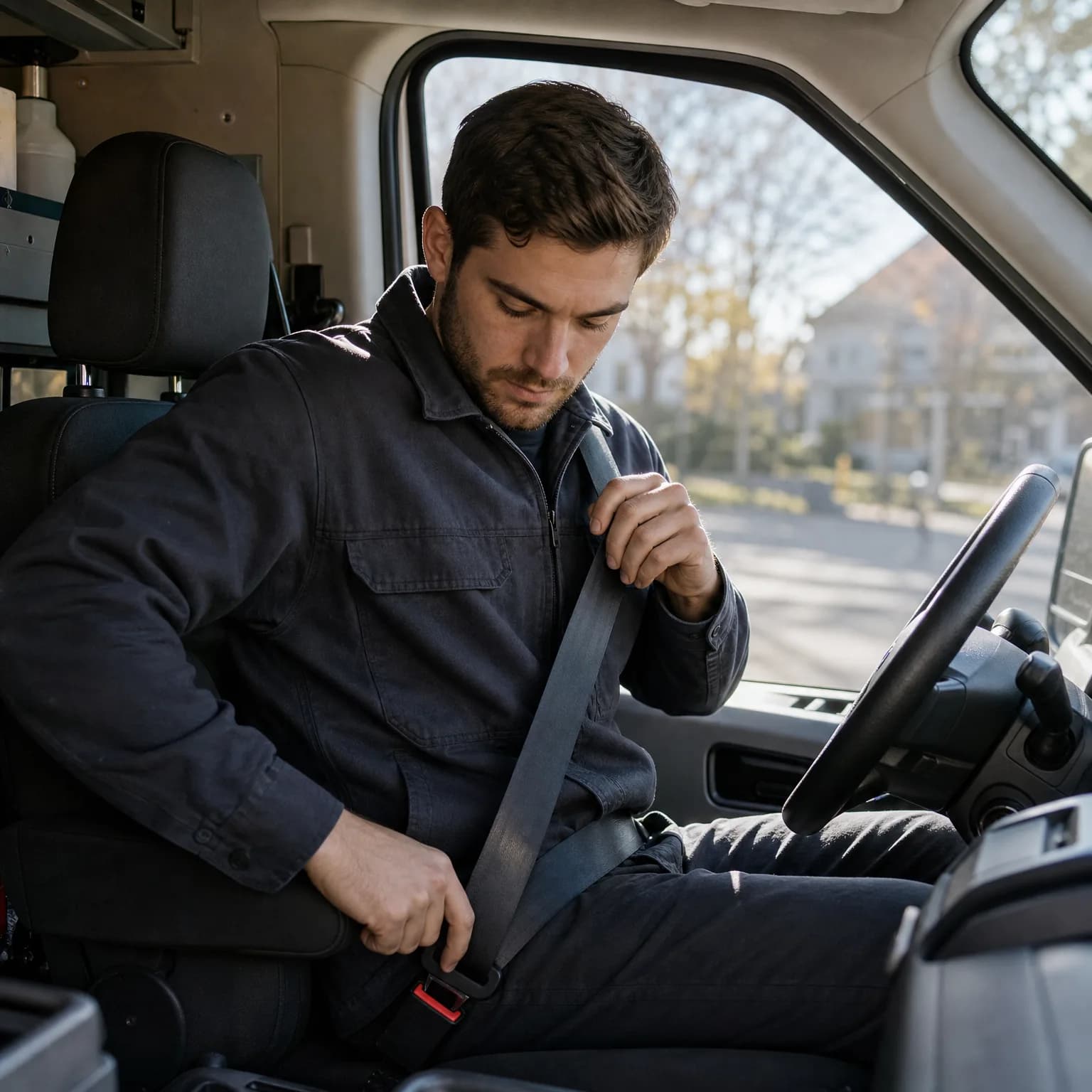






Restricted License Coverage During Suspension
Idaho offers a court-issued Restricted License during your DUI suspension if you petition successfully. The court defines allowed purposes—typically work, school, medical appointments, and court-mandated programs—along with specific time windows and geographic boundaries. Ignition interlock installation is required for the entire restricted license period if your suspension stems from DUI. This is not optional.
You must carry liability insurance and maintain SR-22 filing throughout the restricted license period, even though your driving is limited. The coverage requirement doesn't scale to match restricted use—Idaho mandates full liability limits regardless of whether you're driving 2 hours per week or 40. Carriers price restricted-license SR-22 policies the same as full-privilege SR-22 policies because the liability exposure per mile driven is identical. Restricted privileges reduce your exposure to additional violations; they don't reduce the carrier's exposure to claims when you are driving.
The restricted license petition goes through district court, not Idaho Transportation Department. Processing time varies by county. There's no statewide application fee—courts set their own. You'll need proof of hardship, employment or school enrollment documentation, and SR-22 proof of insurance before the court will consider your petition. If approved, the court sends the order to Idaho Transportation Department, which issues the restricted license. The 90-day minimum hard suspension period applies first—you can't petition for restricted privileges during the initial 90 days.
$25
Idaho License Reinstatement Fee
Idaho charges a $25 base reinstatement fee when your suspension period ends. This fee applies to administrative suspensions processed by Idaho Transportation Department. DUI suspensions may carry additional fees beyond the $25 base—verify the total amount with Idaho Transportation Department before paying, as fee schedules are subject to legislative change.
Idaho Transportation Department Driver Services

Which Carriers Write Dual-Violation Policies in Idaho
Progressive writes SR-22 for dual violations statewide and offers online quoting. Their non-standard tier, called Progressive Direct, underwrites stacked major violations without requiring a broker. You can bind coverage the same day if you meet their underwriting criteria. Geico writes SR-22 after DUI and at-fault accidents but routes dual-violation applications through their non-standard subsidiary—expect the quote to take 24-48 hours instead of instant online binding.
Dairyland specializes in high-risk SR-22 and writes dual violations in all 38 states they serve, including Idaho. They operate through independent agents—you can't quote directly on their website. GAINSCO and The General both write non-owner and standard SR-22 for dual violations, with online quoting available. Bristol West writes SR-22 in Idaho but sells exclusively through Farmers agents and independent brokers, making them harder to comparison-shop without calling multiple agents.
State Farm writes SR-22 in Idaho but underwrites dual violations case-by-case. If your DUI and accident occurred within the same 6-month window, expect a decline. If they're separated by a year or more and you've completed all court-mandated programs, State Farm may quote you—but at a premium higher than the non-standard specialists above. The decision comes down to underwriter discretion, not published guidelines.
Get Multiple Non-Standard Quotes Before Choosing
Non-standard carrier pricing varies by violation recency, ZIP code, and vehicle more than standard-tier pricing does. A carrier that quotes you lowest in Boise might quote 40% higher than a competitor in Coeur d'Alene for the same violation profile. There's no rate consistency across Idaho's counties because non-standard carriers weight local claims frequency and theft rates more heavily than standard carriers do. You need at minimum three quotes from carriers confirmed to write dual violations in your county.
Start with Progressive, Geico, and Dairyland. All three write stacked major violations, all three file SR-22 electronically, and all three allow you to bind coverage before your suspension ends so the SR-22 is on file the day you're eligible for reinstatement. Binding early doesn't waste money—your policy effective date is the date you choose, and SR-22 filing happens automatically when the policy goes live. If you're pursuing a restricted license, bind the policy before your court hearing so you can submit SR-22 proof with your petition. Courts won't approve restricted privileges without proof of insurance already in place.
SR-22 Filing Adds Zero to Premium If You Already Carry Liability
SR-22 is a proof-of-insurance certificate your carrier files electronically with Idaho Transportation Department. It certifies that you're carrying Idaho's minimum liability limits: $25,000 bodily injury per person, $50,000 per accident, $15,000 property damage. If you already maintain liability coverage at or above these minimums, adding SR-22 filing to your existing policy changes nothing about your coverage—it only adds the reporting obligation. The carrier charges a filing fee once, then monitors your policy for the 3-year term. If you let the policy lapse, the carrier notifies Idaho Transportation Department within 24 hours and your license suspends again.
Non-owner SR-22 policies exist for drivers who don't own a vehicle but need to satisfy Idaho's SR-22 requirement to reinstate their license. These policies cost significantly less than standard auto policies because they cover liability only when you're driving someone else's vehicle—there's no collision, comprehensive, or vehicle-specific risk to underwrite. Progressive, Geico, Dairyland, GAINSCO, and The General all write non-owner SR-22 in Idaho. If you're not driving your own car during the suspension period, non-owner SR-22 keeps you legal and reinstatable without paying for coverage you can't use.
Get Your Free Quote
Get My Idaho DUI Insurance QuoteFrequently Asked Questions
How much does SR-22 filing cost in Idaho after a DUI and at-fault accident?
The SR-22 filing itself costs a one-time carrier fee, typically under $50, set by your insurance carrier. What raises your premium is the DUI and at-fault accident on your record—not the SR-22 certificate. Idaho requires 3 years of continuous SR-22 filing after DUI reinstatement, and if the filing lapses the 3-year period restarts from zero.
Can I get a restricted license in Idaho while my DUI suspension is active?
Yes, Idaho courts issue Restricted Licenses during DUI suspension if you petition successfully and prove hardship. You must complete the mandatory 90-day hard suspension period first. Ignition interlock installation is required for the entire restricted license term, and you must carry liability insurance with SR-22 filing throughout.
Which insurance carriers write policies for dual major violations in Idaho?
Progressive, Geico, Dairyland, GAINSCO, and The General all write SR-22 policies for drivers with stacked DUI and at-fault accident violations in Idaho. Standard-tier carriers like State Farm and Allstate typically decline dual major violations outright. Non-standard carriers price the combined risk instead of rejecting it.
Do I need car insurance during my Idaho DUI suspension if I'm not driving?
You need SR-22 filing to reinstate your license after suspension ends, which requires active liability insurance. If you don't own a vehicle, a non-owner SR-22 policy satisfies Idaho's requirement at significantly lower cost than standard auto insurance. The SR-22 must be on file before Idaho Transportation Department will process your reinstatement.
Does an at-fault accident make my DUI insurance more expensive in Idaho?
Yes. Stacking a DUI with an at-fault accident triggers compounding underwriting penalties—carriers price the combined risk higher than the sum of individual surcharges. Non-standard carriers that write dual violations start with higher base rates but offer the only path to coverage when standard carriers decline you outright.