
Cheapest DUI Insurance After Accident — Idaho
Free to compare
Why DUI Plus Accident Blocks Most Carriers
You received a DUI conviction, caused an at-fault accident within the same policy period, and now need SR-22 insurance to reinstate your Idaho license. Every carrier you've called either won't quote you or quotes a monthly premium you can't sustain. The structural problem: Idaho treats DUI and at-fault accidents as independent non-standard triggers. Most carriers that write post-DUI SR-22 will not also write recent at-fault accidents. Most carriers that write accident-prone drivers do not write SR-22 filings. The overlap — carriers willing to write both simultaneously — contains exactly four names in Idaho's market.
This is not bad luck with timing. It's market structure. Preferred-tier carriers like State Farm and Allstate maintain underwriting rules that automatically decline dual high-risk triggers. Standard-tier carriers like Nationwide and Farmers will write one or the other, but not both on the same policy. You need a non-standard carrier whose underwriting appetite specifically includes compounded risk. In Idaho, that list is Bristol West, Dairyland, GAINSCO, and Progressive. Everyone else will decline the application or quote a rate built to make you go away.
“Idaho has 19 carriers writing auto insurance; only 4 will quote DUI + at-fault accident + SR-22 on the same policy.”

Get Back to a Fair Rate in Idaho After a DUI
Get My Idaho DUI Insurance Quote3 years
Idaho SR-22 Filing Period
Idaho requires continuous SR-22 filing for 3 years following a DUI conviction. The clock starts on your conviction date, not your filing date. If your SR-22 lapses for any reason during those 3 years, Idaho Transportation Department suspends your license immediately and the 3-year period restarts from the date you refile.
Idaho Code § 18-8005
What Idaho Counts as At-Fault
Idaho uses modified comparative negligence. If you are 50% or more at fault for an accident, carriers assign full fault to you for underwriting purposes. The accident does not need to involve a citation. Rear-ending another vehicle at a stoplight counts. Failing to yield at an unsigned intersection counts. Sliding into a parked car on ice counts if the investigating officer determines you were driving too fast for conditions.
The at-fault determination lives on your motor vehicle record for 3 years from the accident date. During that window, every carrier that pulls your MVR sees it. Carriers do not care whether you filed a claim. They care whether the state recorded fault. If your accident involved property damage over Idaho's $1,500 reporting threshold, or any injury, the Idaho Transportation Department logged it. That log is what underwriters read.
The compounding problem: your DUI already moved you into non-standard underwriting. The at-fault accident confirms the risk profile. Carriers price you as someone statistically likely to file another claim within 24 months. That statistical assumption drives the premium you're being quoted. You cannot argue your way out of it. You can only find the carrier whose actuarial model prices your specific combination of violations at the lowest rate.
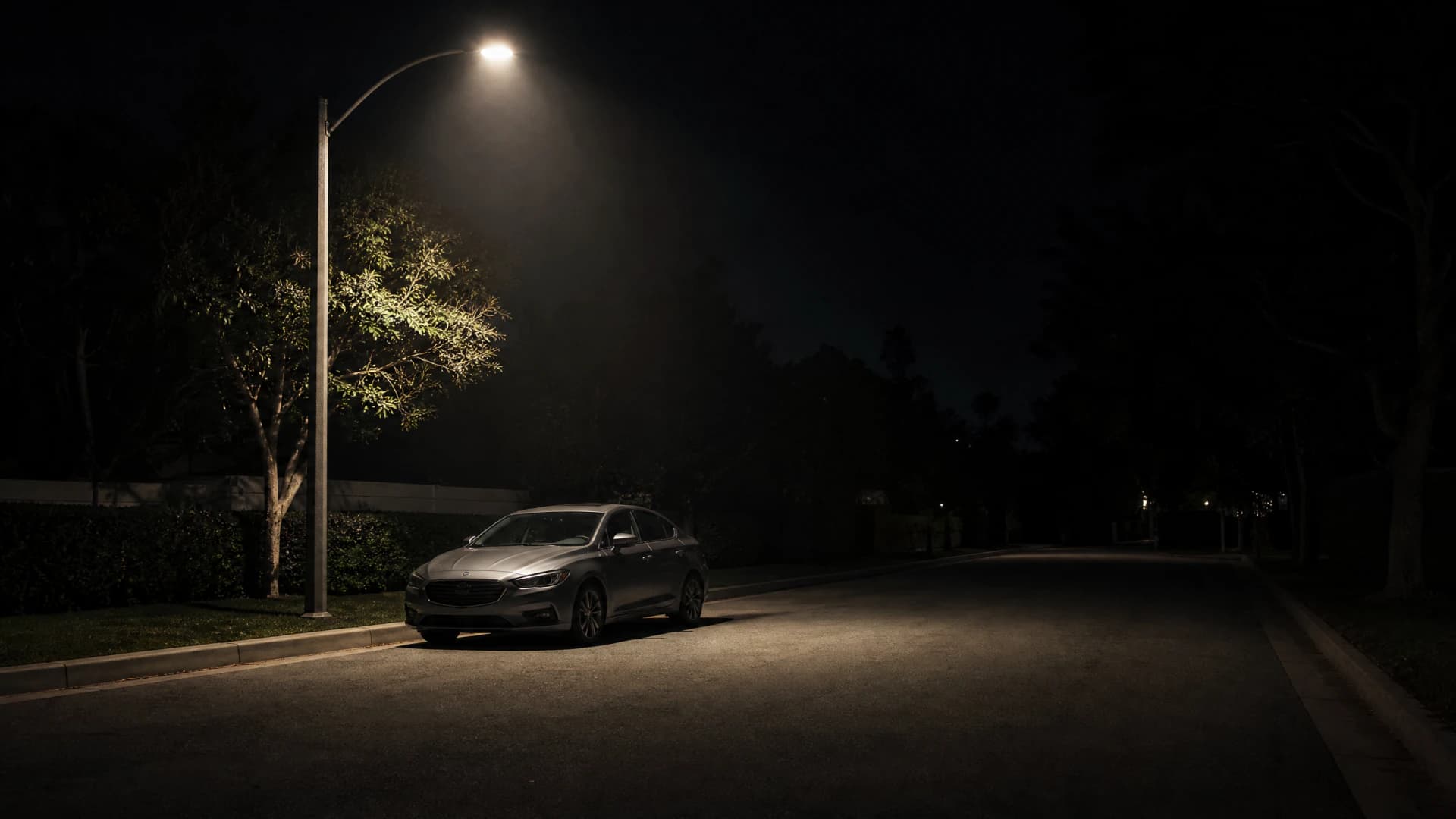
Your blocker: Idaho has 19 carriers writing auto insurance; only 4 will quote DUI + at-fault accident + SR-22 on the same policy.







How SR-22 Filing Works With Dual Risk
The SR-22 is a liability insurance certificate your carrier files directly with the Idaho Transportation Department. It proves you're carrying at least Idaho's minimum liability limits: $25,000 per person for bodily injury, $50,000 per accident for bodily injury, and $15,000 for property damage. You cannot file an SR-22 yourself. Your carrier files it electronically within 24–48 hours of binding your policy.
The dual-risk problem surfaces here: if your carrier cancels your policy for non-payment, they immediately notify Idaho Transportation Department that your SR-22 is no longer in force. Idaho suspends your license the same day. You then have to find a new carrier willing to write DUI + accident + SR-22, bind a new policy, and wait for the new SR-22 to reach the state before your license is reinstated. That gap — the days between cancellation and new filing — extends your suspension and may restart your 3-year SR-22 clock depending on how long the lapse lasted.
Some carriers offer SR-22 policies with reinstatement-fee coverage. This is an optional endorsement that reimburses you for Idaho's $25 reinstatement fee if your license is suspended due to SR-22 lapse. It does not prevent the suspension. It only covers the fee. The endorsement typically costs $3–$5 per month. Worth it if you're concerned about missing a payment.
$25
Idaho License Reinstatement Fee
After resolving the underlying suspension cause and refiling your SR-22, you pay Idaho Transportation Department a $25 reinstatement fee before your license is restored. This fee applies to administrative suspensions triggered by SR-22 lapse, not to DUI-related court suspensions, which carry separate reinstatement costs.
Idaho Transportation Department fee schedule
Coverage Limits and Deductible Decisions
Idaho requires you to carry at least 25/50/15 liability limits while your SR-22 is active. You can buy higher limits, but you cannot go lower. If you own your vehicle outright and it's worth less than $3,000, liability-only makes financial sense — you're not protecting an asset with significant value, and collision premiums on a non-standard policy often exceed the vehicle's actual cash value within 18 months.
If you financed your vehicle, your lender requires full coverage. Non-standard carriers will quote you a $500 or $1,000 collision deductible. The $1,000 deductible typically saves 15–20% on your collision premium compared to $500, but only choose it if you can afford to pay $1,000 out of pocket after an accident. A $500 deductible you can't pay does not help you. A $1,000 deductible you can pay saves you money every month and still covers the claim when it happens.
What Happens If You Drive Without Coverage
Idaho uses an electronic insurance verification system that cross-references active vehicle registrations against active liability policies. If the system flags your vehicle as uninsured, Idaho Transportation Department mails you a notice requiring proof of insurance within 30 days. If you do not respond, they suspend your registration and your license. If you're caught driving on a suspended license, Idaho charges you with a misdemeanor, impounds your vehicle, and adds another suspension period on top of your existing DUI suspension.
The compounding consequence: a suspended-license misdemeanor conviction triggers a second SR-22 filing requirement. You now owe two overlapping SR-22 filings — one for the DUI, one for the suspended-license conviction — and the 3-year clocks run independently. Most non-standard carriers will not write dual SR-22 obligations. You're left with assigned-risk pools, where premiums run 40–60% higher than voluntary non-standard market rates. Do not let your coverage lapse.

Compare Rates Across All Four Carriers
You cannot know which of the four carriers prices your specific combination of violations lowest without quoting all four. Bristol West may quote you $30/month lower than Dairyland in Boise but $40/month higher in Coeur d'Alene. GAINSCO's rate advantage over Progressive varies by your exact address, your vehicle's year and make, and how long ago your DUI conviction occurred. The only way to find the actual lowest rate is to request quotes from Bristol West, Dairyland, GAINSCO, and Progressive within the same week, using identical coverage limits, and comparing the total 6-month premium including SR-22 filing fees. Start with the carriers that offer online quotes — Dairyland, GAINSCO, and Progressive — then contact a local independent agent who writes Bristol West to fill out the comparison.
The Four Carriers That Write Dual Risk
Bristol West writes through the Farmers agent network and independent brokers. They require full coverage (liability + collision + comprehensive) if you financed your vehicle, but will write liability-only if you own the car outright. Bristol West prices the SR-22 filing fee separately — typically $25–$50 one-time, on top of the first month's premium. They allow monthly payment plans without requiring a down payment larger than first month plus filing fee. Online quotes are not available; you must work through an agent.
Dairyland offers online quotes and allows you to bind coverage immediately if you meet their criteria. They write liability-only policies for drivers who do not own a vehicle (non-owner SR-22). Dairyland's underwriting model penalizes the DUI more heavily than the accident — expect the DUI surcharge to account for 60–70% of your rate increase. GAINSCO and Progressive both write online and through agents. Progressive allows you to compare rates across their standard and non-standard tiers in a single session. GAINSCO typically quotes 10–15% lower than Progressive for the same coverage limits, but has a smaller agent footprint in Idaho.
Get Your Free Quote
Get My Idaho DUI Insurance QuoteFrequently Asked Questions
Can I get SR-22 insurance in Idaho if I don't own a car?
Yes. Idaho allows non-owner SR-22 policies that meet the state's liability filing requirement without insuring a specific vehicle. Dairyland, GAINSCO, and Progressive all write non-owner SR-22 policies for drivers with DUI convictions. Non-owner policies cost 30–40% less than standard SR-22 policies because they carry no collision or comprehensive coverage.
How long does an at-fault accident stay on my Idaho driving record?
Idaho keeps at-fault accidents on your motor vehicle record for 3 years from the accident date. Carriers pulling your MVR during that window see the accident and price it into your premium. After 3 years, the accident drops off your public MVR, but carriers that insured you during the accident may retain it in their internal underwriting files for up to 5 years.
What happens if my SR-22 insurance lapses in Idaho?
Your carrier notifies Idaho Transportation Department electronically the same day your policy cancels. Idaho suspends your license immediately. You must purchase a new SR-22 policy, wait for the new filing to reach the state, and pay a $25 reinstatement fee before your license is restored. If the lapse lasts longer than 30 days, your 3-year SR-22 filing period restarts from the date you refile.
Do I need full coverage or just liability with SR-22 in Idaho?
Idaho only requires liability coverage (25/50/15 minimum limits) to satisfy the SR-22 filing. If you own your vehicle outright, liability-only meets the legal requirement. If you financed your vehicle, your lender requires collision and comprehensive coverage regardless of Idaho's SR-22 rules. Bristol West and some other non-standard carriers require full coverage on financed vehicles as an underwriting condition.
Will my SR-22 rate go down after my DUI conviction is 3 years old?
Not automatically. Idaho requires you to maintain SR-22 filing for 3 years, but the DUI conviction itself stays on your driving record for 10 years. Most carriers reduce the DUI surcharge gradually starting at year 4, but you remain in the non-standard tier until the conviction reaches 5 years old. At that point, some carriers will move you back to standard pricing if you have no other violations during the 5-year period.