Two Violations, One Reinstatement Window
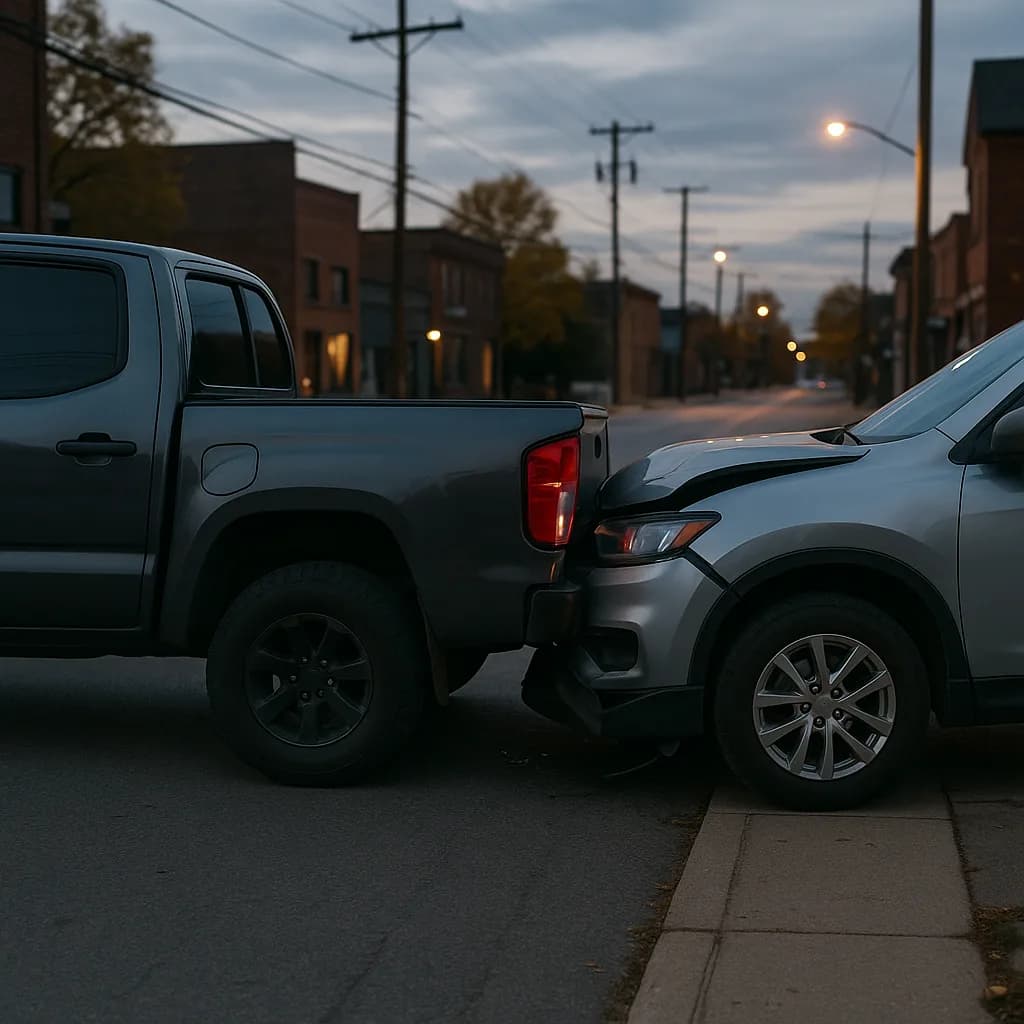
You received a DUI conviction in Idaho, and within the same insurance policy period an at-fault accident appears on your record. The accident is treated as a separate underwriting event — not bundled into the DUI surcharge, but stacked on top of it.
Idaho Transportation Department requires SR-22 filing for three years following DUI conviction under Idaho Code Title 49 chapter 12. The at-fault accident does not extend that filing period, but it does trigger collision history surcharges that persist independently of the SR-22 requirement. Most drivers assume one SR-22 filing addresses both violations. It does not — the SR-22 satisfies state reinstatement for the DUI; the accident creates a second tier filter that determines which carriers will write you at all.
Compare car insurance rates in your state
Get quotes from licensed carriers — no obligation, no spam, results in minutes.
Get Your Free QuoteIdaho DUI Reinstatement Fee
$285
This is the state fee due at reinstatement after completing the 90-day absolute suspension and satisfying SR-22 filing requirements. The fee does not cover the at-fault accident separately — it is a flat reinstatement charge regardless of how many violations appear on the record during the suspension period.
Idaho Transportation Department reinstatement schedule
How Carriers Separate DUI from Collision History
Standard-tier carriers in Idaho — State Farm, Allstate, American Family, Auto-Owners — exit at DUI regardless of whether an accident is present. The DUI alone disqualifies you from preferred and standard underwriting tiers. The at-fault accident becomes relevant only when you move to non-standard carriers that write post-DUI business.
Non-standard carriers writing Idaho SR-22 — Bristol West, Dairyland, GAINSCO, The General, Progressive (standard tier but writes high-risk), National General — evaluate DUI and at-fault accident as separate risk factors. The DUI triggers the SR-22 requirement and places you in non-standard underwriting.
The structural trap: you need liability-only coverage to satisfy SR-22 reinstatement, but the at-fault accident makes collision coverage prohibitively expensive if you own a vehicle worth insuring beyond liability minimums. Most drivers in this position either drive liability-only and accept the financial exposure, or they sell the vehicle and secure non-owner SR-22 coverage until the three-year filing period expires and the accident ages off underwriting consideration.
SR-22 Filing Path with Collision History

You must complete the 90-day absolute suspension before applying for reinstatement. During this period, contact non-standard carriers writing Idaho SR-22 and disclose both the DUI and the at-fault accident upfront. Request quotes from at least three carriers — Bristol West, Dairyland, and Progressive are the most accessible for online quotes; GAINSCO and The General require agent contact but often write higher-severity combinations. Provide the accident date, claim payout amount if known, and whether injury was involved. Carriers evaluate collision history differently: some tier by payout threshold, others by injury presence, others by time since accident.
Once you secure a policy, the carrier files SR-22 electronically with Idaho Transportation Department. After the SR-22 is on file and the 90-day suspension period ends, pay the $285 reinstatement fee to ITD DMV Operations. Your license is reinstated, and the SR-22 filing obligation runs for three years from the DUI conviction date. The at-fault accident remains on your driving record for three years from the accident date, which may or may not align with the SR-22 period depending on when each event occurred.
Related Articles



Restricted Driving Permit Eligibility
Idaho allows Restricted Driving Permit (RDP) during the 90-day absolute suspension if you meet eligibility requirements. The RDP requires SR-22 filing from day one — you cannot petition for the permit without proof of insurance already on file. If you secure the RDP, you may drive to and from work, school, medical appointments, and court-ordered treatment during restricted hours (typically 8am–5pm Monday–Friday for first-offense DUI under Idaho Code 18-8002A).
The at-fault accident does not disqualify you from RDP eligibility, but it does affect which carriers will write the required SR-22 coverage before you apply. Some non-standard carriers decline to file SR-22 for drivers with concurrent DUI and at-fault accident until after the absolute suspension period ends. This creates a procedural blocker: you need the SR-22 to apply for the RDP, but the carrier will not file SR-22 until you are closer to reinstatement. If you encounter this, contact Dairyland or Progressive specifically — both write RDP-eligible SR-22 policies in Idaho and do not impose waiting periods for concurrent violations.
RDP application requires Form ITD-3227, ITD-3208 work verification, signed Drivers Agreement (ITD-3238), proof of SR-22 insurance, and the $60 permit fee. Processing takes approximately five business days. If approved, the RDP allows limited driving during the suspension period, but any violation of the geographic or time restrictions triggers automatic revocation and you serve the remainder of the 90-day suspension without driving privileges.
Idaho SR-22 Filing Period
3 years
The three-year period begins on the DUI conviction date, not the date you file SR-22 or the date your license is reinstated. If you delay reinstatement by six months, the SR-22 obligation still expires three years from conviction — but you must maintain continuous coverage for the entire period or the clock resets.
Idaho Code Title 49 chapter 12
Non-Owner SR-22 as Default Path
If you do not currently own a vehicle, non-owner SR-22 coverage satisfies Idaho's reinstatement requirement and costs significantly less than owner policies when collision history is present. Non-owner policies provide liability coverage when you drive a vehicle you do not own — rental cars, borrowed vehicles, or employer vehicles. The at-fault accident surcharge still applies to non-owner policies, but because there is no collision or comprehensive coverage to price, the total premium is lower.
Geico, Progressive, Dairyland, and USAA all write non-owner SR-22 policies in Idaho and accept applicants with DUI plus at-fault accident. If you plan to remain without a vehicle for the three-year SR-22 period, non-owner coverage is the most cost-effective path and eliminates the collision history surcharge from underwriting consideration.
Compare Carriers Before Filing
The combination of DUI and at-fault accident narrows your carrier options, but it does not eliminate choice. Request quotes from Bristol West, Dairyland, Progressive, and National General at minimum. Others offer zero-fee monthly billing. Ask explicitly about installment fees before binding coverage.
In most cases, the collision premium alone exceeds the vehicle's depreciated value within 18 months, making liability-only coverage the rational choice even if you can afford full coverage. The at-fault accident surcharge decreases annually as the accident ages, so collision coverage becomes more affordable in years two and three of the SR-22 period if you choose to add it later.